News & Insights
Tumbler vs Water Bottle vs Travel Mug: Which One Fits Your Order?
A tumbler, a water bottle and a travel mug are all stainless steel — but each is built for a different day. Compare them by use, lid, mouth and size to pick the right shape for your order.
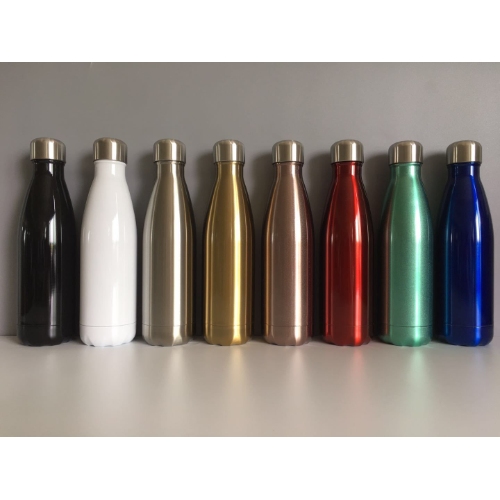
A buyer who asks for "a bottle" can mean three different things. A tumbler, a water bottle and a travel mug are all made of stainless steel, all three can be vacuum insulated, and all three can carry a custom logo. But they are shaped for different days, and the shape decides whether the product gets used or left on a shelf.
This guide compares the three by what they are, how they are used, and what to check before a wholesale order. It does not set a price, an order quantity, or a delivery time. Those details change with each order, so confirm them with the supplier before you order.
The short answer
If the bottle will sit on a desk and be sipped through the day, a tumbler is usually the right shape. If it will travel in a bag, go to the gym, or spend a day outdoors, a water bottle is usually the right shape. If it will carry coffee on a commute, in a car, and be drunk with one hand, a travel mug is usually the right shape.
That is the whole guide in one paragraph. The rest of this article explains why, and what to check when the use is not that simple — because many orders mix two or three shapes, and the mix is where the value is.
What is a tumbler?
A tumbler is a wide, straight-sided cup, usually with a flat or slightly tapered base. The classic wholesale sizes on this site are 20 oz and 30 oz. Wine tumblers are smaller, at 12 oz, with other sizes in the same family. Some tumblers come with a handle, some with a straw lid, and some with more than one lid and handle option for the same body — one model, several combinations.
A tumbler is made to be picked up and set down again, many times a day. Its wide top makes it easy to fill, easy to add ice, and easy to clean. Its wide base makes it stable on a desk. That is why tumblers are the usual choice for an office, a meeting room, or a desk gift: they sit still, they are easy to reach for, and the logo is large and easy to see.
The same wide shape is also the tumbler's limit. A 30 oz tumbler may not fit a small car cup holder or a crowded desk, as the size guide on this site notes. A tumbler carried on its side in a bag needs a lid that seals — so check the lid on the exact product you order, and ask the supplier to confirm it, rather than assuming every tumbler lid is the same. Some lids are made for sipping, some for a straw, and some for a full seal, and the lid decides whether the tumbler can travel.
What is a water bottle?
A water bottle is the narrow, tall shape most people picture first. It has a mouth that is wide enough to fit ice and to clean easily, or narrow enough to drink from without spilling, depending on the model. The range on this site runs from small bottles up to large 40, 64 and 80 oz models, with 20 and 30 oz in the middle — the sizes the size guide compares by use.
A water bottle is made to be carried. It goes into a bag, a backpack, a gym bag, or a car door pocket. Its lid closes over the mouth, and Winsong describes its bottles as having a secure leak-proof lid. That closed lid is what makes a bottle different from an open cup: it can be carried on its side, knocked over, and put down in a bag without the drink inside becoming a problem. Ask the supplier to confirm the lid for the exact product, because the lid is part of the product, not an afterthought.
A bottle is the right shape when the drink has to travel with the person. For a gym, a hike, a day outdoors, a warehouse floor, or a long event, a bottle is carried further and opened more often than a tumbler, and it needs to survive that. A wide mouth fits ice easily and is easy to wash at the end of the day — the cleaning guide on this site covers a simple daily wash and a deeper weekly clean, and a wide mouth makes both easier.
What is a travel mug?
A travel mug is a bottle shaped for coffee on the move. The travel coffee cups on this site are 16 oz / 500 ml — a single serving of coffee, sized for a commute rather than a full day of water. A travel mug is usually slimmer than a 30 oz tumbler, so it fits a car cup holder, and its lid is made to be opened and closed with one hand, while driving or walking.
A travel mug is made for a short, repeated routine: fill it in the morning, drink it on the way, wash it, and fill it again the next day. It is not a replacement for a water bottle. A 16 oz travel mug will run dry on a long day outdoors, just as a 12 oz bottle would. Its job is narrower — hot coffee, kept hot, in a shape that fits the car — and it does that job well.
The insulation is the same construction as the bottles and tumblers: food-grade double-walled vacuum insulation, cold for 24 hours and hot for 12 hours, as Winsong lists it. The numbers describe the range, not a promise for a single drink on a single day; the vacuum insulation guide on this site explains what helps the insulation work and what shortens it — how full the bottle is, how often the lid is opened, and the condition of the seal.
How they compare, side by side
The easiest way to compare the three is by the day they are built for.
A tumbler is built for a desk. It is wide, stable, easy to fill and clean, and its logo is easy to see. Its weak point is travel: it is wide for a cup holder, and its lid has to be checked for carrying on its side.
A water bottle is built for carrying. It is tall, it closes fully, it fits a bag, and it comes in the widest range of sizes — from a small bottle for a child's bag to a large 64 or 80 oz bottle for a long day or a shared supply. Its weak point is that a narrow mouth can be harder to fill with ice and harder to wash, so check the mouth width on the product page.
A travel mug is built for a commute. It is slim, it fits a cup holder, and its lid opens with one hand. Its weak point is capacity: 16 oz is a coffee, not a day's water, and it is the wrong shape for a gym bag or a long outdoor day.
None of the three is better in general. Each is better for one use, and a mixed order is often the right answer: tumblers for the office, bottles for the field team, travel mugs for the drivers. The mistake is ordering one shape for every person, and then finding that half of them do not use it.
Choosing by use
For an office or a desk gift, start with a tumbler. A 20 oz tumbler suits most desks; a 30 oz suits a long day without refilling, if the desk has room for it. A wine tumbler at 12 oz suits a smaller gift or a shorter use, such as a meeting or a party. The logo area on a tumbler is large and flat, so a logo reads well — but check the proof, because the logo that fits a 30 oz tumbler may need a smaller version on a 12 oz one.
For a gym, a sports team, or outdoor work, start with a water bottle. A 20 or 30 oz bottle is the middle of the range; a larger bottle suits a long session or a shared supply. A wide mouth fits ice, and a lid that seals matters most here, because the bottle will be carried on its side in a bag. Ask the supplier which lid comes with the product, and whether other lids are available.
For a commute, start with a travel mug. A 16 oz travel coffee cup fits the car and the morning routine. If the same person also needs water through the day, add a bottle to the order rather than asking the travel mug to do both jobs.
For an event or a retail shelf, think in sets. A tumbler is the visible product — it sits on a table and shows the logo. A bottle is the useful product — it goes home in a bag and gets used again. A travel mug is the specific product — it suits the drivers and the commuters in the group. A mixed order covers more people than a single shape, and it gives the buyer a reason to come back for the shape they did not order first.
For a corporate gift, the same logic applies. Do not order the shape you like; order the shape the recipient will use. A desk worker will use a tumbler. A field worker will use a bottle. A commuter will use a travel mug. If you do not know, ask the supplier which shape suits the group you describe — name the group, the day, and where the product will be used, and the answer will be more useful than a question about a single product.
What to check before you order
Check the lid first. The lid decides whether the product can travel, whether it can be drunk with one hand, and whether it seals. Ask what lid comes with the exact product, and whether other lids are available. A product page that lists a secure leak-proof lid is describing that product; do not assume the same lid comes with a different shape.
Check the mouth next. A wide mouth fits ice and is easy to clean. A narrow mouth is easier to drink from without spilling. The rule is simple — match the mouth to the use, not to the picture.
Check the size next. The size guide on this site compares 12, 16, 20 and 30 oz by use — office, gym, travel, events and retail. The same sizes appear across tumblers, bottles and travel mugs, but the same number does not mean the same product. A 20 oz tumbler and a 20 oz bottle hold the same amount, but they sit differently on a desk, fit differently in a bag, and show a logo differently.
Check the logo area last, before you confirm. Custom logos are supported on bottles, tumblers and mugs for business and wholesale orders, and custom colours and packaging are available. The print area is different on each size and shape, so share your logo file in your inquiry and ask where it will go on the size you choose. Ask for a proof before you confirm the order, check the spelling and the colours on it, and keep a copy of the version you approved.
And confirm the details that change with each order — the price, the order quantity, and the delivery time — with the supplier for your exact order, after the shape, size and use are settled. Do not guess at them, and do not assume a figure from one product applies to another.
Frequently asked questions
Is a tumbler the same as a water bottle? No. Both can be stainless steel and vacuum insulated, but a tumbler is a wide cup made to sit on a desk, and a water bottle is a tall, closed container made to be carried. The lid, the mouth and the base are different, and the use is different.
Can a tumbler go in a car cup holder? Some can and some cannot. A 20 oz tumbler may fit; a 30 oz tumbler may not fit a small cup holder. Check the base size on the product page, and ask the supplier to confirm it for the exact product if the car matters.
Can a travel mug replace a water bottle? For coffee on a commute, yes. For water through a long day, no — a 16 oz travel mug holds one serving, and it will run dry. If one person needs both, order both shapes.
Do all three keep drinks cold for 24 hours and hot for 12 hours? That is how Winsong lists the range: food-grade double-walled vacuum insulation, cold for 24 hours, hot for 12 hours. Ask the supplier to confirm the insulation for the exact product you are ordering, and describe how it will be used. A bottle left open, half full, or with a damaged seal will not hold its temperature the way a filled, closed bottle does.
Which shape is best for a custom logo? All three take a custom logo, and the best shape is the one the recipient will use — a logo on an unused product helps no one. A tumbler shows a logo well on a desk; a bottle shows it wherever the bottle travels; a travel mug shows it on a commute. Share your logo file and ask where it will sit on each size, because the print area is different on each shape.
What should I put in my first inquiry? Send it through the contact form at /contact. Include the shape, the size, the colour, and the logo if you have one, and add how the product will be used — office, gym, travel, event, retail, or gift. Name the lid you need, the mouth width if it matters, and the size mix if the order covers more than one group of people. The supplier can then confirm the product, the lid, and the logo area for that exact order.