News & Insights
How Vacuum Insulation Keeps Drinks Cold 24 Hours and Hot 12 Hours
How does a bottle keep a drink cold for 24 hours and hot for 12 hours? This guide explains double-walled vacuum insulation, what helps it work, and what to ask before a wholesale order.
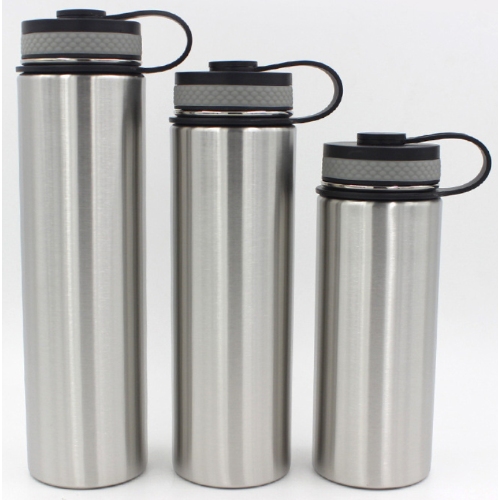
A stainless steel bottle that keeps a drink cold for 24 hours and hot for 12 hours sounds simple on a product page. It is a short sentence, and it is the sentence Winsong uses to describe its bottles: food-grade double-walled vacuum insulation, cold for 24 hours, hot for 12 hours. This guide explains what those words mean, how the insulation works, what helps it work well, and what a wholesale buyer should check before ordering.
It is written for a buyer ordering bottles for staff, events, retail, or resale. It is not a laboratory report, and it does not set a price, an order quantity, or a delivery time. Those details change with each order, so confirm them with the supplier before you order.
What is double-walled vacuum insulation?
A vacuum insulated bottle has two stainless steel walls with a gap between them. The gap is sealed and the air is taken out, so the space between the walls is a vacuum — a space with almost no air in it. The bottle you hold is the outer wall. The drink sits inside the inner wall. The vacuum sits between them.
That is the whole construction in one sentence: two walls, one vacuum gap. Winsong describes its bottles as food-grade double-walled vacuum insulated stainless steel, and that description is the starting point for everything else in this guide.
The word "food-grade" refers to the stainless steel that touches the drink. Winsong bottles are described as food-grade stainless steel, BPA-free, and rust-resistant. Those are properties of the material, not of the insulation alone, and they apply across the bottle range. If you need a specific material grade or a test report for a product, ask the supplier to confirm it for that exact product. Do not assume a claim on one product page applies to every product.
How does the vacuum keep a drink cold or hot?
Heat moves in three ways: through solid material, through air or liquid, and as radiation. A drink in an ordinary single-walled cup loses or gains heat through all three at once. The cup wall carries heat, the air around it carries heat, and the surface radiates heat. That is why a hot drink in a thin cup cools quickly, and why a cold drink in a thin cup warms up and leaves condensation on the outside.
A vacuum gap breaks two of those three paths. There is almost no air in the gap, so heat cannot travel through air from the inner wall to the outer wall. There is no solid material joining the two walls across the gap, so heat cannot travel through solid material either — the walls only meet at the neck and the base, where the bottle is sealed. Radiation still crosses a vacuum, but the polished stainless steel surfaces reflect much of it, so far less heat gets through than through a single wall.
The result is that heat moves into or out of the drink far more slowly. A cold drink stays cold because the warmth outside cannot easily reach it. A hot drink stays hot because its heat cannot easily escape. The same bottle does both jobs, because the vacuum slows heat in both directions. It does not heat or cool the drink itself. It only slows the change.
That is also why the stated times are different for cold and hot: cold for 24 hours, hot for 12 hours. The numbers describe the insulation as Winsong lists it. Do not read them as a promise for every drink in every situation. A bottle left open, filled with a small amount of liquid, or filled without the lid on will not hold its temperature the way a filled, closed bottle does. Ask the supplier to confirm the insulation for the exact product you are ordering, and describe how the bottle will actually be used.
What does the lid have to do with it?
The vacuum gap protects the sides of the bottle, but the lid is a separate part of the job. Heat escapes through the top of the bottle whenever the lid is open, and it also passes through the lid material itself when the lid is closed. A bottle with good wall insulation and a poor lid will not hold its temperature as well as the wall alone suggests.
That is why Winsong describes its bottles as having a secure leak-proof lid, and why the lid deserves the same attention as the walls when you order. Check what lid comes with the product you are ordering. A lid that seals tightly keeps heat in and liquid in. A lid that is easy to open matters for a bottle that will be used while driving or working. A wide-mouth lid fits ice easily and is easy to fill and clean, which matters for a bottle that will be washed every day.
If you are ordering for a specific use, name the lid you need in your inquiry. For a gym bag, a leak-proof lid matters most, because the bottle will be carried on its side. For a car, a lid that opens with one hand matters. For an office desk, a lid that is easy to remove and wash matters. The supplier can confirm which lid comes with each product and whether other lids are available.
Why does the bottle feel cool on the outside when the drink is hot?
A vacuum insulated bottle feels cool on the outside when it holds a hot drink, and it stays dry on the outside when it holds a cold drink. Both come from the same cause: the outer wall is separated from the drink by the vacuum gap, so it stays close to the temperature of the room, not the temperature of the drink.
That is why Winsong describes its bottles as sweat-proof. A cold drink in a single-walled bottle chills the wall, moisture from the air condenses on it, and the bottle leaves a wet ring on a desk or a damp patch in a bag. A vacuum insulated bottle does not do that, because its outer wall is not cold. The same separation keeps a hot drink from warming the outside of the bottle, so the bottle is comfortable to hold.
If a bottle ever feels hot on the outside while holding a hot drink, or wet on the outside while holding a cold drink, that is a sign worth noting. It suggests the insulation is no longer doing its job. When a wholesale order arrives, check a sample bottle the way you would check any other part of the order: fill it, close the lid, and feel the outside after a while. That simple check tells you more than a claim on a page.
What makes a bottle hold its temperature longer?
Four things decide how long a bottle holds its temperature in real use. None of them is a secret, and all of them are worth checking when you order.
First, how full the bottle is. A full bottle holds its temperature longer than a half-full one, because there is more drink and less air inside. The air inside a half-full bottle warms or cools quickly and then passes that change to the drink. If the bottle will be used for a long day, a larger size or a fuller bottle will serve better. The size guide on this site compares 12, 16, 20 and 30 oz by use, and the same idea applies here: match the size to the day, not just to the shelf.
Second, how often the lid is opened. Every time the lid opens, the drink meets the air outside, and heat moves in or out freely. A bottle opened once will hold its temperature far longer than a bottle opened every few minutes. That is normal, and it is not a fault in the bottle. If the use means frequent sipping, a smaller bottle that is refilled often may be more practical than a large bottle opened all day.
Third, what goes into the bottle first. A bottle filled with a drink straight from the fridge, or with boiling water, starts at the temperature it needs to hold. A bottle filled with a lukewarm drink has further to go. Some buyers warm or cool the bottle itself before filling it, by rinsing it with hot or cold water first. Whether that step is worth it depends on the use, and the supplier can say what it recommends for its products.
Fourth, the condition of the bottle. A bottle that has been dropped or dented may have a damaged seal, and a damaged seal lets air into the vacuum gap. Once air is in the gap, the insulation no longer works the way it should. That is why a delivery check matters: look at each bottle, check the lid seal, and feel the outside after filling a sample. The quality-check guide in this series covers what to look at when a wholesale order arrives.
None of these points changes the construction of the bottle. They change how the construction performs in a real day, and a buyer who knows them can set the right expectation with the people who will use the bottles.
Cold 24 hours, hot 12 hours — what do the numbers mean in practice?
The numbers on the Winsong homepage — cold 24 hours, hot 12 hours — describe the insulation of the bottle range. They are the figures to use when you compare products on this site, and they are the figures to put in your inquiry when you ask the supplier to confirm them for the exact product you want.
In practice, treat them as a description of the bottle's construction, not as a guarantee for a single drink on a single day. A bottle filled to the top, closed tightly, and left unopened will hold its temperature far longer than a bottle that is half full and opened often. A bottle carried in a hot car will face more heat than a bottle kept in a cool office. The numbers do not change, but the day around the bottle does.
That is why the most useful question in an inquiry is not "does it really last 24 hours?" but "what does this product hold, and under what use?" Name the use — office, gym, travel, outdoor work, an event — and ask the supplier to confirm the insulation and the lid for the exact product and the exact use. A clear description of the use gets a more useful answer than a question about a number alone.
Do not assume that a larger bottle keeps a drink cold for longer than a smaller one. The insulation is a property of the bottle construction, not of the size. A 30 oz bottle holds more drink, so it takes longer to change temperature once it is full, but its walls insulate the same way a 12 oz bottle's walls do. Size decides how much the bottle holds and how often it needs refilling. Insulation decides how slowly the temperature changes. Keep the two ideas separate when you order.
How does vacuum insulation compare with a single-walled bottle?
A single-walled stainless steel bottle is a single layer of steel between the drink and the outside. It is light, simple, and easy to make, and it carries a drink well. But it does not insulate. A hot drink in a single-walled bottle is too hot to hold, and it cools quickly. A cold drink in a single-walled bottle warms quickly and leaves condensation on the outside.
A double-walled bottle without a vacuum is better than a single wall, because the air gap between the walls slows heat. But air still carries heat, so a double-walled bottle without a vacuum does not hold temperature as long as a vacuum insulated one. The vacuum is what makes the difference: removing the air removes the main path heat would take through the gap.
That is why the phrase on the product pages has three parts, and each part matters: "double-walled" for the two walls, "vacuum" for the gap between them, and "food-grade stainless steel" for the material that touches the drink. When you compare products, check that all three are there. A bottle described only as double-walled may not have a vacuum gap, and a bottle described only as stainless steel may not be insulated at all.
What should you ask before a wholesale order?
Send your first inquiry through the contact form at /contact. Include the bottle style, the size, the color, and the logo if you have one, and add how the bottles will be used. Then add the insulation questions that matter for that use.
Ask the supplier to confirm the insulation for the exact product you are ordering — not just for the range, but for that style and size. Ask what lid comes with it, and whether other lids are available. Ask whether the product is available in the size mix you want, and what the logo area looks like on each size, because a logo that fits on a 30 oz bottle may need a smaller version on a 12 oz bottle.
If the bottles are for a long day outdoors or a full-day event, say so, and ask which size and lid the supplier would suggest for that day. If they are for office desks, say so, and ask about the mouth width and how easy the bottle is to clean. Winsong's cleaning guide covers a simple daily wash and a deeper weekly clean for vacuum insulated stainless steel bottles, and a wide mouth makes that routine easier.
If you need a proof of the logo on the bottle, ask for it before you confirm the order. A proof shows where the logo will sit and how large it will be. Check the spelling and the colors on the proof, and keep a copy of the version you approved.
Do not guess at the price, the order quantity, or the delivery time. Confirm those details with the supplier for your exact order, after the style, size, and use are settled. A mixed order or a different lid may change the details, so confirm them after the product is chosen, not before.
Frequently asked questions
Does a vacuum insulated bottle keep drinks cold and hot? Yes, the same construction does both. The vacuum gap slows heat moving in either direction, so a cold drink stays cold and a hot drink stays hot. The bottle does not heat or cool the drink; it only slows the change. Winsong describes its range as cold for 24 hours and hot for 12 hours.
Why is the hot time shorter than the cold time? That is how Winsong lists the range: cold for 24 hours, hot for 12 hours. The numbers describe the insulation as listed on the site. Ask the supplier to confirm them for the exact product you are ordering, and describe how the bottle will be used.
Does a bigger bottle insulate better? No. The insulation is a property of the bottle construction — the double wall and the vacuum gap — not of the size. A larger bottle holds more drink, so a full large bottle changes temperature more slowly, but its walls insulate the same way. Choose the size for how much the bottle needs to hold, and check the insulation separately.
Can I put ice in a vacuum insulated bottle? A wide-mouth bottle fits ice easily and is easy to fill and clean. Check the mouth width on the product page for the bottle you are ordering, and ask the supplier to confirm it if you are not sure. Ice in a bottle that is then closed tightly will stay frozen far longer than ice in an open cup, because the vacuum gap slows the heat that would melt it.
Will the outside of the bottle get wet or hot? No, not when the insulation is working. The outer wall stays close to room temperature, so a cold drink does not make the outside wet and a hot drink does not make the outside hot to hold. That is why the bottles are described as sweat-proof. If the outside feels hot or wet in use, check the bottle: the seal may be damaged.
How do I clean a vacuum insulated bottle? A simple daily wash and a deeper weekly clean keep the bottle in good condition, and a wide mouth makes both easier. The cleaning guide on this site covers the routine step by step. Do not put a vacuum insulated bottle in a dishwasher unless the supplier confirms that the exact product allows it; ask first.
Can I order a vacuum insulated bottle with my logo? Custom logos are supported on bottles, tumblers, and mugs for business and wholesale orders. The print area is different on each size and shape, so share your logo file in your inquiry and ask where it will go on the size you choose.